French troops have taken control of the airport in the northern Mali town of Kidal, Reuters reported Wednesday. The town is one of the last strongholds of the Islamist rebels. From Reuters:
Kidal would be the last of northern Mali's major towns to be retaken by French forces, which retook Gao and Timbuktu earlier this week in a campaign to drive al Qaeda-linked Islamists from Mali's north.
"They arrived late last night and they deployed in four planes and some helicopters," Haminy Belco Maiga, president of the regional assembly of Kidal said, adding he had seen no early indications of resistance from rebel forces.
ORLANDO, Fla. (AP) ? Attorneys for the former neighborhood watch volunteer charged with shooting Trayvon Martin to death on Wednesday asked for more time to prepare his case, saying prosecutors had been slow to turn over evidence.
At the same time, Zimmerman's lead attorney, Mark O'Mara, renewed his request for donations to George Zimmerman's legal defense, which he said could cost up to $1 million.
"The state has virtually unlimited resources to prosecute George," O'Mara said on Zimmerman's defense fund website. "To finance his defense, however, George relies on the generosity of individuals who believe he is innocent."
Spokesman Shawn Vincent said Zimmerman's attorneys want his second-degree murder trial to be moved from June to November. Zimmerman has pleaded not guilty.
A hearing in which Zimmerman will argue he was acting in self-defense is scheduled for April. The judge has said that hearing will be at least 45 days before the trial.
Prosecutors did not immediately respond to emails and phone calls about the defense request.
O'Mara said prosecutors had been slow to turn over evidence. As an example, he said someone from State Attorney's Office had removed Martin's cell phone from an evidence locker to have it sent to California for analysis, but the state has refused to give him any information about the agency and the type of tests being run on the phone. He also said prosecutors had made it difficult for O'Mara to get answers to administrative questions from a chief investigative agent and had refused to forward them other information on Martin and a witness.
O'Mara also asked the public to donate more money for his defense, saying on the web site that Zimmerman's defense fund has raised more than $314,000 since he was charged. Of that amount, $95,000 was spent on bail, almost $62,000 was spent on Zimmerman's living expenses during the past eight months and $56,100 was spent on security. The pricey living expenses were the result of Zimmerman having to stay at extended-stay hotels until he could find a place to rent after his bail conditions were changed to restrict him to Seminole County, Fla., according to the statement on the website said.
You know that signature look and feel of the Apple Store? Well, the interior as well as exterior designs of the hugely lucrative retail monstrosity is finally the trademarked property of Apple.
Although the news is just coming to light now, Apple secured the legal trademark to the general designs associated with the Apple Store several days ago.
According to a report late Tuesday from Reuters, the U.S. Patent and Trademark Office granted Apple?s request last week for trademarks.
The description of the trademarks includes ?a clear glass storefront surrounded by a paneled facade? and, within the store, an ?oblong table with stools?set below video screens flush mounted on the back wall.?
Last year, a fake Apple store in Kunming, China featuring the white Apple logo and wooden tables drew widespread attention after a blogger wrote about visiting it. The store looked so authentic, even the upbeat salespeople thought they were working for Apple. Chinese authorities quickly ordered the store to close, as well as more than 20 others that were selling Apple products, but were not authorized to do so.
Apple has reportedly been pursuing trademark protection for the now-iconic Apple store design for close to two years.
AFL-CIO President Richard Trumka (Carolyn Kaster/AP)Organized labor is ?entirely behind? comprehensive immigration reform and will mount a ?full-fledged? campaign to help drive it through Congress, AFL-CIO President Richard Trumka told Yahoo News on Tuesday.
Trumka, whose federation comprises 57 unions representing some 12 million people, called the planned overhaul ?one of our top priorities right now.? He spoke by telephone from Las Vegas, Nev., where he was to attend President Barack Obama?s speech on immigration reform.
?We think everybody ought to have the right to work hard and to progress to citizenship,? Trumka said.
White House officials cite robust support from organized labor?which at times in recent history has opposed giving the estimated 11 million undocumented immigrants on U.S. soil a path to citizenship?as a key factor in their optimism about getting a comprehensive bill through Congress. They also point to the expansion of support among Christians, notably evangelicals. And they joke that the difficulty of managing a broad coalition is the kind of problem they like having.
Unions ?did have at one point some differences? on the issue, but ?the entire labor movement is entirely behind this now,? Trumka said. ?We?ll be at the table the whole time this thing is being developed to make sure it meets the needs of workers.? Once it?s drafted, he continued, ?we?ll be pushing this thing [with a] full-fledged campaign? aimed at both public opinion and wary lawmakers.
?We?ll be targeting those in the House or the Senate that either are recalcitrant and don?t want to do anything or aren?t where they need to be," he said.
Labor wants to see a comprehensive overhaul?"It can?t just be hit and miss," Trumka added?that does a better job of managing legal immigration to meet labor market needs, ensures employers are not exploiting undocumented immigrants, gives those on U.S. soil illegally a path to citizenship and makes sure that families are not broken up, he said.
Trumka also noted that unions are ?a little concerned? about a proposed provision in the bipartisan Senate framework requiring that undocumented immigrants seeking legal status provide ?a proven history of employment.? That could be difficult?employers may not want to admit that they hired such workers?but it could ?be defined in a very broad sense,? he said.
?The system is clearly broken right now, doesn?t work for anybody, doesn?t work for the country,? he added.
The AFL-CIO, the country's largest labor federation, isn't exactly a newcomer to the debate. It produced an outline of its own in August 2009. While organized labor's national clout has diminished along with shrinking membership, unions remain a core constituency for Democrats, and much of the party's backbone, providing cash and voter outreach.
Can you imagine a world without zombie shooters? Neither can we. The zombie apocalypse is proving to be nothing more than a sci-fi nerd?s fantasy at this point, but that doesn?t mean that games based on it are not awesome. Especially the ones that fall under the category of side-scrollers, like the new game from Triniti Interactive called Call of Mini: Brawlers. In it, players seem to inhabit a zombie-infested world full of characters that appear to be made out of Lego. This applies to both the playable characters and the zombies.
Call of Mini: Brawlers features 3D graphics, 5 playable characters, and a load of kick-ass weapons that can be used to blast through hordes of zombies in an infinite number of stages. The game also lets users complete challenges and go through certain obstacles apart from simply killing tons of zombies. In short, if you?re a hard core fan of zombie shooters, you?re going to have countless hours of fun playing this one.
To give this game a whirl, just make your way to Google Play where it can currently be downloaded for free. In fact, why don?t you save yourself some time and simply click on the link to Google Play highlighted as a source down below.
David Gonzales
David is a mobile computer geek who firmly believes that in order to stay healthy, one needs to eat daily doses of gadgets for breakfast, lunch, and dinner. Join him as he indulges his passion for technology and recent fascination with all things Android.
One day before the winter transfer window closes, Liverpool finalizes a deal that had been rumored for close to a fortnight. Twenty-year-old Brazilian attacking midfielder Phillipe Coutinho was granted a British work permit, allowing the Reds to complete his $13.4 million move from Inter Milan.
?I?m feeling very happy, it?s a very important step in my career,? Coutinho told this new club?s website. ?I?m expecting to come here and play good football to give my contribution on the pitch.?
Celebrated as the future of the?Nerazzurri?when he was bought from Vasco de Gama in 2010, Coutinho only showed scarce flashes of his potential during parts of three seasons at the San Siro. In 28 league matches, he scored three times but has only featured in 10 Serie A?matches since returning from last season?s loan spell at Espanyol.
In Spain, Coutinho looked like the player Inter thought they were getting from Vasco, the Brazilian scoring five times in 16 appearances in Barcelona. Though those performances gave Inter fans reason to believe Coutinho would flourish open his return to Milan, the attacker has been unable to get regular time under Andrea Stramaccioni. Two-and-a-half seasons and 28 games after being brought over as an 18-year-old, Coutinho is surplus to requirements.
It?s a complete turnaround from where Coutinho found himself before his arrival in Italy. Back in 2010, Coutinho was a year removed from a part in Brazil?s U-17 world title team. He?s worked his way into a Vasco side that had just gotten promoted to Brazil?s Serie A. He?d known since he was 16 that was going to end up in Milan. There?s a reason why Inter considered him key part of their future.
Small, quick, and extremely skilled, Coutinho can be deployed across the width of the pitch behind the striker. Ideally he?s play through the middle, either in support of another forward or as an outright No. 10. Unfortunately, at the level at which Inter Milan plays, those positions demand output: goals, assists, chances created. At this point in his career, Coutinho?s just doesn?t bring enough production to justify a spot.
?I?m a player who likes to make moves and to play along with the attack, passing as well as scoring,? Coutinho said. Unfortunately, neither skill won him meaningful time in Milan.
Now he?s gone, and while it may be too early to give up on somebody that promising, but Inter got a good price for him. In agreeing to the ?8.5 million fee, Liverpool?s agreed to pay for potential instead of performance, but when you?re talking about hyped 20-year-olds, that?s the cost of playing this game.
But with any questionable fee, there are immediate questions. Is Coutinho worth it? Does Liverpool need him? What else could the club have done with that money?
Coutinho will never be worth it. In the present, he?s too expensive, and if he comes good, $13.4 will seem cheap. Inter?s price is that ethereal middle ground that allows them to justify abandoning their investment.
Liverpool, however, doesn?t need Coutinho. They?ve got Suso. Moroccan?Oussama Assaidi has used Africa Cup of Nations to remind Liverpool fans he deserves more time. Jonjo Shelvey, a completely different kind of player, can occupy some of the same spaces Brendan Rodgers may play their new prospect. The Reds don?t need Coutinho, so they must feel they?re getting value.
The bigger questions are more basic. How good is he? Can he live up to his hype? And now, how will he fit in England?
He?s got the talent to be one of the league?s best players, but that?s a statement that would have been true four years ago. There?s little reason to believe Coutinho?s going to step on Mersey and become the player he?s supposed to be, but the most beguiling point of this move? That transformation could happen at any time.
Jan. 29, 2013 ? By allowing employees to participate in a work-sponsored internal social networking site, a company can improve morale and reduce turnover, according to a Baylor University case study published in the European Journal of Information Systems.
The study, which looked at a financial institution's efforts to acclimate new employees into the organization, also found that participation led to a greater sense of well-being and organizational commitment and better employee engagement.
"For millennials, mixing their work life and their social life via an online social networking created positive emotions for the employees who use the system," said Hope Koch, Ph.D., Baylor University associate professor of information systems in the Hankamer School of Business and study co-author. "These emotions led to more social networking and ultimately helped the employees build personal resources like social capital and organizational learning."
SNSs can have a positive impact on IT employees and their workplace, especially when the new employees are relocating to unfamiliar areas and need to build a network, assume highly technical jobs and become integrated into a large organization where it may be difficult to know where to go for help, according to Koch.
The study centered on a financial institution's efforts to reduce IT employee turnover by starting a social and work-related online networking site. Under the supervision of executives, the IT new hires developed and managed the site's content. Since most new hires had moved hundreds of miles to start their new jobs with the institution, they initially used the social pages as an introduction to the community. After a year or so with the organization, the more senior new hires began using the system to acclimate and mentor incoming new hires.
All study respondents worked in the institution's IT department and included new hires, middle managers and executives. With less than three years of experience, most new hires and interns were men between 21 and 27 years old. The middle managers and executives were baby boomers or members of generation X.
The internal social networking site helped the new hires build social capital in several ways, according to Koch.
"It gave them access to people who could provide useful information and new perspectives and allowed them to meet more senior new hires and executives. These relationships set the new hires at ease during work meetings, helped them understand where to go for help and increased their commitment to the financial institution's mission," she said.
Ironically, middle managers, even though they wanted freedom from mentoring new hires, developed a negative attitude toward online social networking when they realized that the new hires had managed to accrue social capital and social experiences with senior executives that they had not had access to in their many years of work.
The SNS system also helped the new hires maintain relationships with one another, thus facilitating a network of acquaintances that can do small favors and help build emotionally close friendships. Finally, by allowing the new hires to access information on the SNS, meet other new hires and develop and maintain relationships with their peer group, the financial institution was able to shift some of the burden of acclimating the new hires away from middle managers and human resources.
Despite the good outcome of this institution's experience, the study data suggest that organizations should move cautiously when implementing SNSs, Koch said. "While the new hires enjoyed using the system, the middle managers experienced frustration, isolation and envy, and the senior executives were somewhat circumspect.
"Before beginning an internal social networking initiative, organizations should consider analyzing how the system may impact both its users and non-users, paying particular attention to potential isolation of non-users and the negative stigma associated with SNS in the workplace," Koch said.
Co-authors of the study were Dorothy Leidner, Ph.D., Ferguson Professor of Information Systems at Baylor; and Ester Gonzalez from Washington State University.
Share this story on Facebook, Twitter, and Google:
Other social bookmarking and sharing tools:
Story Source:
The above story is reprinted from materials provided by Baylor University, via Newswise.
Note: Materials may be edited for content and length. For further information, please contact the source cited above.
Journal Reference:
Hope Koch, Ester Gonzalez, Dorothy Leidner. Bridging the work/social divide: the emotional response to organizational social networking sites. European Journal of Information Systems, 2012; 21 (6): 699 DOI: 10.1057/ejis.2012.18
Note: If no author is given, the source is cited instead.
Disclaimer: This article is not intended to provide medical advice, diagnosis or treatment. Views expressed here do not necessarily reflect those of ScienceDaily or its staff.
The everyday ? filled with its supposedly inconsequential interactions and circumstances ? is actually quite consequential when it comes to romantic relationships.
That?s because relationships are cumulative, said Nikki Massey-Hastings, Psy.D, a psychotherapist who specializes in couples. ?Each seemingly insignificant daily interaction with one?s partner builds upon the interactions from yesterday, last week, and last year? for better or worse.?
A couple with a history of loving interactions and success solving daily problems is more likely to have a securely attached relationship, Massey-Hastings said.
And that?s a great thing. Couples with a secure attachment are able to rely on each other, turn to each other for comfort and traverse potentially tough times, she noted.
In other words, positive daily interactions create buffers against future challenges.
Take parenting, for instance. One of Massey-Hastings?s clients told her: ?We finally had dinner and watched a movie last night for the first time since we brought the baby home. At the end of our night, we smiled at each other and said ?see you in 3 months! Miss you.??
This couple was able to joke about their situation because they had years of wonderful interactions and success dealing with mundane problems like decorating their bedroom and deeply emotional ones like figuring out treatments for their autistic son, she said.
Silvina Irwin, Ph.D, a clinical psychologist who also works with couples, described relationships as ?living bonds.? According to Irwin, ?without regular tending and attention, [the relationship] will wither and suffer.?
But you might be worried that working on your relationship is another time-consuming task to heap on an already overflowing pile of responsibilities. However, as Irwin said, ?tending to your relationship can be woven into the fabric of your everyday life with a little extra thought and intention.?
Below, she and Massey-Hastings share five suggestions for enhancing your relationship every day.
1. Create connection-boosting rituals.
?Create a meaningful way to connect that meets both partners? needs for connection that you can count on each day,? Massey-Hastings said. For instance, when she was just beginning her career, she and her husband would eat dinner together almost every night.
But then her schedule changed, and that was no longer possible. ?One week of this shift and we were both in tears ? we didn?t realize how much that ritual structured our time to connect,? she said. So they revised their routine. Today, they have a snack when she gets home.
?Eating together and talking about the day, for couples and for families, is a very powerful ritual of connection,? she said.
Rituals don?t need to be elaborate, either. It could be something as simple as rubbing each other?s feet every night, which Massey-Hastings and her husband also do. It?s a minute but meaningful ritual they look forward to, she said.
If you have kids, you can create rituals after they?re in bed. For instance, Massey-Hastings works with a couple who cuddles in bed for 30 minutes after putting their child to bed.
2. Be affectionate when you say hello or goodbye.
?A time that lends itself naturally to acknowledging your bond is around moments of separation and reunions,? said Irwin, who also leads workshops for couples. She suggested asking yourself: ?Do I hug and kiss my partner when we greet each other or say goodbye??How about in the evening when we say goodnight??
If you?ve been together for a long time, you might not. But this can contribute to ?couples feeling more like roommates than lovers,? she said. Whether it?s a hug, kiss or touch, daily physical attention can greatly enhance your relationship.
3. Let your partner know they?re on your mind.
Send your partner a text, leave a loving note or give them a quick call during the day, Irwin said. As she noted, these seemingly small gestures communicate an important message: ?You matter to me.? ?This can be especially meaningful when folks work long hours or experience prolonged periods of separation,? she said.
4. Acknowledge how much your partner means to you.
Let your partner know the things they do or say that are meaningful to you, Irwin said. Maybe your partner gives you a massage every night or cracks a joke after you?ve had a tough day at work. Maybe they make you coffee every morning or always wash the dishes after you cook dinner.
?[This] shows that you aren?t taking your partner for granted, and lets them know that they make a difference in your life,? she said. ?A wonderful positive spiral that can ensue when we take a moment to point out the way we appreciate our partner,? she added.
5. Check in with each other.
?Make it an intention to slow down, make eye contact, sit near each other, touch one another and check in,? Irwin said. Even just asking your partner ?How are you?? is a beautiful way to bond.
?These conversations bring a significant point of connection in couples? sometimes-busy, seemingly parallel lives.?It?s saying to each other ?In our crazy lives, the person I want to talk with at the end of the day is you!?? she said.
Relationships certainly take work. But nourishing your partnership every day isn?t painstaking. Instead, it gives you the opportunity to build your bond. Plus, helping your relationship blossom on a daily basis helps you cope better as a couple with the inevitable challenges of life.
Margarita Tartakovsky, M.S. is an Associate Editor at Psych Central and blogs regularly about eating and self-image issues on her own blog, Weightless.
Like this author? Catch up on other posts by Margarita Tartakovsky, M.S. (or subscribe to their feed).
????Last reviewed: By John M. Grohol, Psy.D. on 28 Jan 2013 ????Published on PsychCentral.com. All rights reserved.
APA Reference Tartakovsky, M. (2013). 5 Ways to Enhance Your Relationship Every Day. Psych Central. Retrieved on January 29, 2013, from http://psychcentral.com/blog/archives/2013/01/28/5-ways-to-enhance-your-relationship-every-day/
On a night when Tennessee was honoring one of the greatest coaches in college basketball history, Diggins delivered one of the best performances of her brilliant career. The senior guard scored a career-high 33 points as No. 2 Notre Dame beat the ninth-ranked Lady Vols 77-67 on Monday night for its 14th straight victory.
Diggins' big performance spoiled Tennessee's celebration of former Lady Vols coach Pat Summitt, who had a banner raised in her honor at Thompson-Boling Arena before the game. The announced crowd of 13,556 included former Lady Vols greats Tamika Catchings, Chamique Holdsclaw, Michelle Marciniak and Candace Parker.
"This is one of the toughest places to play with all those fans out there," Diggins said. "It was a great moment for Coach Summitt, with all those players like Candace Parker and Tamika Catchings on the sidelines. It was a very emotional night tonight, and I thought we did a good job of handling it because they had a lot to play for."
Diggins took over the game early in the first half to put the Irish ahead. She dominated on both ends of the floor again early in the second half as Notre Dame built a 19-point lead. After Tennessee cut the margin to five in the closing minutes, Diggins responded once again.
"She had a phenomenal game. ... She's shooting the ball extremely well," Notre Dame coach Muffet McGraw said. "She shot 50 percent from the field (13 of 26) against a great defense, managed the game, ran the team. Fourth game in nine days, I thought we looked a little tired in stretches at the end, and I really didn't want to take her out to even give her a quick breath. She really gutted it out for 40 minutes with intense pressure on the ball."
Diggins helped Notre Dame become the first team ever to beat both Connecticut and Tennessee in three consecutive seasons. The Irish won 73-72 at Connecticut on Jan. 5. She also secured the Irish's first win ever in Knoxville.
After losing its first 20 meetings in this series, the Irish beat the Lady Vols in a 2011 regional final and trounced Tennessee 72-44 last season. That 72-44 result represented Tennessee's lowest point total and its second-most lopsided loss in Summitt's 38-year tenure.
The Lady Vols (16-4) wanted to avenge that loss while also honoring Summitt, whose 1,098-208 career record gives her the most wins of any Division I men's or women's basketball coach ever. Summitt stepped down in April after announcing in 2011 that she has early-onset dementia, Alzheimer's type.
"We went up against a great team and a great player in Skylar Diggins," Tennessee coach Holly Warlick said. "We battled. When we learn to maintain a level of play for us, we're going to be very good. We just get in some lulls and some valleys."
Bashaara Graves had 19 points and 13 rebounds for Tennessee, which had won its last nine games. Taber Spani added 12 points and Meighan Simmons had 11 points. Jewell Loyd had 10 points for Notre Dame, while Kayla McBride had nine points and 10 rebounds.
Tennessee used the emotion of the pregame ceremony for Summitt to take an early 7-2 lead, but the Irish answered with a 12-2 run of their own. Diggins scored 11 points in the first 10 minutes of the game to help the Irish build an eight-point lead.
Notre Dame had chances to build an even bigger advantage.
Simmons, who entered the night averaging a team-high 17.6 points per game, picked up two early fouls and played just 11 minutes in the first half. Tennessee's frontcourt endured a major loss when center Isabelle Harrison took a spill after driving to the basket and had to be helped to the locker room. The Lady Vols had announced before the game that Harrison was playing with a meniscus injury in her left knee.
Warlick had no immediate word after the game on the condition of Harrison, who didn't return to the game.
"I hope she's going to be back because we need her," Warlick said. "She's a vital part of our program."
But the Irish didn't take advantage in the early going and only led 33-29 at the half. Diggins wasn't getting much help from her teammates, who shot a combined 8 of 30 in the first half.
"I thought the first half we were just kind of running through the motions of our offense," Diggins said. "It's almost like we weren't trusting our offense."
Diggins then took over the game.
The senior guard scored 12 points in the first seven minutes of the second half. She had six points, three steals, one block and an assist during an 11-0 run that gave the Irish a 16-point lead.
"She played great," Spani said. "She played fantastic. She hit shots for them. She was their leader emotionally. She willed their team to victory."
After trailing by as many as 19 points, Tennessee rattled the Irish with a furious rally over the final 10 minutes and cut the lead to 69-64 on Spani's free throw with 3:54 remaining.
That's when Diggins took over again.
She found Madison Cable for a layup that got the Irish out of danger. After Spani and Jasmine Jones missed jumpers on Tennessee's next possession, Diggins sank a 3-pointer to make it a 10-point game.
Notre Dame's lead wouldn't drop below eight again. One of the game's marquee personalities had come through on the big stage once again.
"With all those people out there, it's great for women's basketball," Diggins said. "When you go to college, you dream of playing in games like this."
Your heart fell out of your butt when you learned you'd been eating ketchup wrong. Prepare to lose it yet again, because we've been borking our Chinese food containers too. More »
WASHINGTON (Reuters) - President Barack Obama will wade cautiously into the debate over U.S. immigration reform on Tuesday, seeking to build momentum for a new bipartisan plan to offer a pathway to citizenship for the country's 11 million illegal immigrants.
Reflecting the growing clout of Hispanic voters, Obama will travel to Nevada little more than a week after his second inauguration and make the case for swift action by Congress to overhaul immigration laws.
Immigration reform could give Obama a landmark second-term legislative achievement, but he is expected to tread carefully in a speech in Las Vegas, just a day after a group of influential Senate Democrats and Republicans laid out a broad plan of their own.
Obama's challenge is to help build public support for the senators' framework, which is in line with many of his main ideas for a sweeping immigration overhaul, while not alienating his fiercest Republican foes who might resist anything with the Democratic president's name on it.
While Obama is likely to use the bully pulpit of the presidency, backed up by a White House-organized grass-roots campaign, he will likely be more circumspect for now about how personally involved he becomes in congressional negotiations.
"The minute it becomes Obama's plan, the Republicans kick automatically into opposition," said Bill Schneider, a political scientist at George Mason University in Virginia. "The White House knows to back off for now."
Scheduled to speak at a Las Vegas high school at 11:15 a.m. PST, Obama does not intend to unveil legislation of his own. He will instead urge lawmakers to press ahead with their efforts even as he restates the "blueprint" for reform he rolled out in 2011, which called for an "earned" path to citizenship, administration officials said.
The flurry of activity marks the first substantive drive in years to forge an agreement on fixing America's flawed immigration system. Though the debate is likely to be contentious there is a growing consensus in Washington that the conditions are finally ripe for tackling the problem.
Obama and his fellow Democrats see their commitment to immigration reform as a way to solidify their hold on the growing Latino vote, which they won handily in the 2012 election. Nevada, for example, has a fast-growing Hispanic population that helped Obama carry the state in the November election.
Many Republicans, worried that their party has alienated Hispanics with anti-immigrant rhetoric, are suddenly open to cooperation on the issue as they seek to set a new tone.
DEVIL IN THE DETAILS?
The eight-member Senate group includes John McCain, a Republican from the border state of Arizona; Charles Schumer, a centrist Democrat from New York; and Republican Marco Rubio of Florida, a Cuban-American favorite of the Tea Party movement who has helped garner support from influential conservatives.
Translating the aspirations expressed by the group into an inevitably lengthy and complicated bill will itself be a major challenge in Congress. At the same time, the White House wants to see further details before Obama will fully embrace the senators' approach.
In an attempt to build support, the Senate proposal would couple immigration reform with enhanced border security efforts aimed at preventing illegal immigration and ensuring that those foreigners temporarily in the United States return home when their visas expire.
Under the proposal, undocumented immigrants would be allowed to register with the government, pay a fine, and then be given probationary legal status allowing them to work.
Ultimately, these immigrants would have to "go to the end of the line" and apply for permanent status. But while waiting to qualify for citizenship, they would no longer face the fear of deportation or harassment from law enforcers if they have steered clear of illegal activity.
Obama's aides consider it a breakthrough that Republican members of the bipartisan group of senators have agreed to a path to citizenship, a concept that many in their party have long opposed as tantamount to amnesty for law-breakers.
The White House remains wary, however. The president's aides have written up extensive legislative language for an immigration overhaul and will step in with their own formal proposals if the Senate effort falls apart, an administration official said.
Immigration reform, sidelined by economic issues and healthcare reform during Obama's first term, is part of an ambitious liberal agenda he laid out in his second inaugural address. That agenda also includes gun control, gay rights and fighting climate change.
Last summer, Obama took executive action so that the federal government stopped seeking to deport illegal immigrants who had arrived in the United States as children - a dramatic change that was celebrated in the Hispanic community.
After winning the bitterly fought election, Obama promised to tackle the issue comprehensively early in his new term.
Satyam Sharma sails smoothly in qualifying round of All India Senior Ranking Badminton Tournament
India?s upcoming player Satyam Sharma continued his winning run in Men?s Singles qualifying where he outplayed his country-mate Babu S. in a dominating fashion at ONGC All India Ranking Badminton Tournament-2013 on Tuesday, January 29, in Bangalore.
The in-form Satyam was impressive in the arena as he did not show any sign of confusion while playing against Babu and finished off this qualifying round contest by taking the court time for just 20 minutes.
Satyam was in superb form as he played fast and positive badminton all the way and thrashed his compatriot in a one-sided manner with a huge 21-15 and 21-17 score on the board.
Meanwhile, Babu tried his best to play positive badminton but he failed to live up to expectations and eventually went down against his incredible team-mate without showing any considerable performance.
Satyam delivered extremely well from the opening points of first set as he played with remarkable speed and took over the charge of rallies.
The lofty Satyam showed that he has obtained top class skills on court and remained successful in getting a strong domination in the arena by playing attacking and positive badminton.
It was Satyam who did not show any respect to his passionate rival in the starting half and took a reasonable lead on score board.
After the one-minute break, Babu tried to put up strong resistance but failed to take charge of rallies and also committed many mistakes that helped his rival in stretching his lead.
It was a smooth sailing for the in-form Satyam who did not face any reasonable resistance from his challenger and won the opening game with a comfortable 21-15 difference on the board.
Babu was again in trouble in the following set as he received a severe treatment from his opponent who was flawless on court.
The hard to return smashes and net killings kept Satyam ahead of his challenger all the way until the end of first half in second set.
Satyam was composed and positive on court in the ending points of second set and bagged the second game with a superb margin of 21-7.
WASHINGTON (AP) -- Three months after Superstorm Sandy devastated coastal areas in much of the Northeast, the Senate moved Monday toward passing a $50.5 billion emergency package of relief and recovery aid after House Republicans stripped it of spending unrelated to disasters.
Despite opposition from conservatives concerned about adding billions of dollars more to the nation's debt, Northeast lawmakers were optimistic about having the 60 votes needed to win Senate approval and send the long-delayed package to President Barack Obama, who has said he would sign it. The House passed the bill two weeks ago.
Lawmakers say the money is urgently needed to start rebuilding homes, businesses, public transportation facilities and other infrastructure damaged by the Oct. 29 storm, one of the worst ever to strike the Northeast. Sandy is blamed for more than 130 deaths in the U.S. and tens of billions of dollars in property damages, particularly in New York and New Jersey.
"There's no excuse for delay," said Sen. Bob Menendez, D-N.J. "We need to get assistance to victims of Sandy as soon as possible.
The biggest chunk of money is $16 billion for Housing and Urban Development Department community development block grants. Of that, about $12 billion will be shared among Sandy victims as well as those from other federally declared disasters in 2011-2013. The remaining $3.9 billion is solely for Sandy-related projects.
More than $11 billion will go to the Federal Emergency Management Agency's disaster relief aid fund for shelter, restoring power and other storm-interrupted utility services and meeting other immediate needs arising from Sandy and other disasters. Another $10 billion is devoted to repairing New York and New Jersey transit systems and making them more resistant to future storms.
"The funding in this bill is urgently needed," said Sen. Barbara Mikulski, D-Md., as Senate debate began. "Hundreds of thousands of families have seen their lives turned upside down."
Sen. Dan Coats, R-Ind., said Republicans weren't seeking "to undermine" help for Sandy victims, but instead wre trying to make sure that the money was actually being spent on emergency needs.
"We're simply trying to say we need some standards," Coats said.
Earlier in January, Congress approved and Obama signed a $9.7 billion bill to replenish the National Flood Insurance Program, which has received well more than 100,000 flood insurance claims from businesses, homeowners and businesses related to Sandy. Added to the new, $50.5 billion package, the total is is roughly in line with the $60.4 billion that Obama requested in December.
Sandy damaged or destroyed 305,000 housing units in New York and more than 265,000 businesses were disrupted there, according to officials. In New Jersey, more than 346,000 households were destroyed or damaged.
The aid package was greased for passage before the last Congress adjourned and the new one came in on Jan. 3. But Speaker John Boehner refused to bring it to the floor after two-thirds of House Republicans voted against a "fiscal cliff" deficit reduction deal raising taxes on couples making more than $450,000 a year while deferring some $24 billion in spending cuts to have been shared between defense and domestic programs.
The ruckus after the Senate had passed an earlier $60.4 billion Sandy relief package by a nearly 2-to-1 margin on Dec. 28 exposed deep political divisions within Republican ranks. "There's only one group to blame for the continued suffering of these innocent victims, the House majority and their speaker, John Boehner," Republican New Jersey Gov. Chris Christie fumed at the time.
Top House Republicans responded by bringing new Sandy aid legislation to the floor under ground rules designed to win over as many Republicans as possible while retaining support from Democrats eager to approve as much in disaster aid as possible.
GOP leaders cut spending in the Senate bill unrelated to disasters. One was to transfer $1 billion for training Iraqi policemen to instead be used on bolstering security at U.S. diplomatic missions abroad in the wake of a Sept. 11 terrorist attack on the American consulate in Benghazi, Libya, where the U.S. ambassador and three other Americans were killed.
Also deleted was $188 million for an Amtrak expansion project that included new, long-planned tunnels from New Jersey to Penn Station in Manhattan, and another $150 million for fisheries disasters that states such as Alaska and Mississippi could have shared.
After all the cost-cutting, 179 House Republicans still voted against the disaster aid package with only 49 favoring it. GOP leaders had to rely on yes votes from 192 Democrats to pass it.
As with past natural disasters, the Sandy aid bill does not offset the aid with spending cuts, meaning the aid comes at the cost of higher deficits. The lone exception is an offset provision requiring that $3.4 billion for Army Corps of Engineers projects to protect against future storms be covered by unspecified spending cuts of an equal amount in other programs before next October.
Sen. Mike Lee, R-Utah, sought to amend the final package Monday with a provision to cut federal programs across the board by one-half of 1 percent through 2021 as a way to prevent the disaster aid from swelling the U.S. debt. Democrats were optimistic Lee would be unable to muster 60 votes needed to prevail.
As of Monday, FEMA said it spent $3.3 billion in disaster relief money for shelter, restoring power and other immediate needs arising from the storm.
New York, New Jersey, Connecticut, West Virginia, Virginia, Maryland, New Hampshire, Ohio, Delaware, Rhode Island, Pennsylvania, Massachusetts and the District of Columbia have shared that money.
SINGAPORE?? Apple's iconic iPhone is losing some of its luster among Asia's well-heeled consumers in Singapore and Hong Kong, a victim of changing mobile habits and its own runaway success.
Driven by a combination of iPhone fatigue, a desire to be different and a plethora of competing devices, users are turning to other brands, notably those from Samsung Electronics, eating into Apple's market share.
In Singapore, Apple's products were so dominant in 2010 that more devices here ran its iOS operating system per capita than anywhere else in the world.
But StatCounter, which measures traffic collected across a network of 3 million websites, calculates that Apple's share of mobile devices in Singapore ? iPad and iPhone ? declined sharply last year. From a peak of 72 percent in January 2012, its share fell to 50 percent this month, while Android devices now account for 43 percent of the market, up from 20 percent in the same month last year.
In Hong Kong, devices running Apple's iOS now account for about 30 percent of the total, down from about 45 percent a year ago. Android accounts for nearly two-thirds.
"Apple is still viewed as a prestigious brand, but there are just so many other cool smartphones out there now that the competition is just much stiffer," said Tom Clayton, chief executive of Singapore-based Bubble Motion, which develops a popular regional social media app called Bubbly.
Leading indicators Where Hong Kong and Singapore lead, other key markets across fast-growing Asia usually follow.
"Singapore and Hong Kong tend to be, from an electronics perspective, leading indicators on what is going to be hot in Western Europe and North America, as well as what is going to take off in the region," said Jim Wagstaff, who runs a Singapore-based company called Jam Factory?that's developing mobile apps for enterprises.
Southeast Asia is adopting smartphones fast ? consumers spent 78 percent more on smartphones in the 12 months up to September 2012 than they did the year before, according to research company GfK.
Android rising Anecdotal evidence of iPhone fatigue isn't hard to find: Where a year ago iPhones swamped other devices on the subways of Hong Kong and Singapore, they are now outnumbered by Samsung and HTC smartphones.
While this is partly explained by the proliferation of Android devices, from the cheap to the fancy, there are other signs that Apple has lost followers.
Singapore entrepreneur Aileen Sim recently launched an app for splitting bills called BillPin, settling on an iOS version because that was the dominant platform in the three countries she was targeting ? Singapore, India and the United States.
"But what surprised us was how strong the call for Android was when we launched our app," she said.
Indeed, 70 percent of their target users ? 20-something college students and fresh graduates ? said they were either already on Android or planned to switch over.
"Android is becoming really hard to ignore, around the region and in the U.S. for sure, but surprisingly even in Singapore," she said. "Even my younger early-20s cousins are mostly on Android now."
BillPin launched an Android version this month.
Standing out from the crowd Napoleon Biggs, chief strategy officer at Gravitas Group, a Hong Kong-based mobile marketing company, said that while Apple and the iPhone remained premium brands there, Samsung's promotional efforts were playing to an increasingly receptive audience.
For some, it is a matter of wanting to stand out from the iPhone-carrying crowd. Others find the higher-powered, bigger-screened Android devices better suited to their changing habits ? watching video, writing Chinese characters ? while the cost of switching devices is lower than they expected, given that most popular social and gaming apps are available for both platforms.
"Hong Kong is a very fickle place," Biggs said.
Janet Chan, a 25-year-old Hong Kong advertising executive, has an iPhone 5, ?but its fast-draining battery and the appeal of a bigger screen for watching movies is prodding her to switch to a Samsung Galaxy Note II.
"After Steve Jobs died, it seems the element of surprise in product launches isn't that great anymore," she said.
Shifting trends To be sure, there are still plenty of people buying Apple devices. Stores selling their products in places such as Indonesia were full over the Christmas holidays, and the company's new official store in Hong Kong's Causeway Bay has queues snaking out of the door most days.
But the iPhone's drop in popularity in trendy Hong Kong and Singapore is mirrored in the upmarket malls of the region.
"IPhones are like Louis Vuitton handbags," said marketing manager Narisara Konglua in Bangkok, who uses a Galaxy SIII. "It's become so commonplace to see people with iPads and iPhones so you lose your cool edge having one."
In the Indonesian capital Jakarta, an assistant manager at Coca Cola's local venture, Gatot Hadipratomo, agrees. The iPhone "used to be a cool gadget, but now more and more people use it," Hadipratomo said.
There is another influence at play: hip Korea. Korean pop music, movies and TV are hugely popular around the region, and Samsung is riding that wave. And while the impact is more visible in Hong Kong and Singapore, it also translates directly to places like Thailand.
"Thais are not very brand-loyal," says Akkaradert Bumrungmuang, 24, a student at Mahidol University in Bangkok. "That's why whatever is hot or the in-thing to have is adopted quickly here. We follow Korea, so whatever is fashionable in Korea will be a big hit."
This report was written by Jeremy Wagstaff in Singapore, with additional reporting by Lee Chyen Yee in Hong Kong, Khettiya Jittapong and Amy Sawitta Lefevre in Bangkok, and Andjarsari Paramaditha in Jakarta.
>>>good evening, much of the world's attention today was focused on a horrific tragedy in brazil, the
death toll
tonight at least 230 after a fast-moving fire broke out in a crowded nightclub. officials say too many people and too few exits turned the club into a
death trap
after a
rock band
's pyrotechnics apparently ignited the ceiling. many patrons were left unable to get out, overwhelmed by the smoke, and in some cases, the flames themselves much the circumstances are eerily similar to some other deadly nightclub fires the past several years, including one in this country. today's tragedy happened in the southern brazilen
university town
of
santa maria
. nbc's
mike taibbi
reports.
>> reporter: the kiss nightclub was packed with the usual saturday night crowd when at 2:00 in the morning, a disaster. the
ground floor
was filled with smoke. club security initially blocked several emergency exits, thinking patrons were leaving without paying and that left only a few ways out. in the ensuing panic, many victims were trampled, others died of
smoke inhalation
. witnesses told police the fire was sparked by a pyrotechnics show on stage, according to nick ravenskroft of itv news.
>>the stunt on stage with the flare made the ceiling catch fire.
>> reporter: whatever the precise cause, the fire spread incredibly quickly as the crowd struggled to find ways to safety. some clubgoers who did make it out, joined firemen and onlookers in their attempts to open new escape routes using sledge hammers and axes, but it was too late for many inside. does of victims were carried to arising ambulances, if they survived.
santa maria
's major trauma hospital was quickly overwhelmed.
>> translator: the injured are scattered around the hospital. those waiting for news outside are desperate.
>> reporter: they were desperate, too, outside the club, as more and more bodies of those who hadn't survived were laid on the ground. the numbers of the dead rose so quickly that the city morgue ran out of room. the bodies of scores of victims were brought, instead, to a local gymnasium. eat merging details of this disaster, a packed club, too few escape route and a fire triggered by on-stage pyrotechnics brought to mind several other similar nightclub tragedies. there was a
2003
inferno in
west warwick
,
rhode island
's, station nightclub that claimed 100 victims much the
2004
blaze in ba when knows aires with 200 victims. but as brazil's president consoled relatives of the victims here, her country, soon to host the
world cup
and the olympics, remains in shock at one of its worst modern tragedies.
mike taibbi
, nbc news,
los angeles
.
The Olu of Warri, HRM Ogiame Atuwatse II, has charged members of Chambers International, JCI, to continue the good work of sensitising the citizenry on self improvement and actualization as a means of getting Nigeria out of its current leadership problem.
The Olu gave the charge when Warri Chapter of JCI and some national executives of the body paid him a courtesy visit as part of activities for the investiture of Josephine Ukah as 2013 Chapter President of Junior Chamber International, Warri.
The royal father enjoined them not to relent in their determination to bring about leadership re-orientation in Nigeria and the world at large. He gave the delegation his royal blessings and promised them his continuous support.
Josephine Ukah, on her part, said the visit was to seek the advice of the royal father on how they could be actively involved in making the community a better place. She said JCI has four areas of opportunities, which include the individual, the community, international and business.
Comments are moderated. Please keep them clean and brief.
Colorado Springs Investment Property. Are you looking for investment properties in Colorado Springs? Wholesale Real Estate? Distressed properties? Bank Owned Real Estate, Short Sales, cash flowing rental properties, fix and flip opportunities? Colorado Real estate investors look no further...here is your source for Colorado Springs Investment Property
To review the resource of the client: http://www.facebook.com/ColoradoSpringsInvestmentProperty
Contact: Kate Ramsayer kramsayer@agu.org 202-777-7524 American Geophysical Union
The following highlights summarize research papers that have been recently published in Geophysical Research Letters (GRL), Water Resources Research, Journal of Geophysical Research Planets (JGR-E), Journal of Geophysical Research Oceans (JGR-C), and Journal of Geophysical Research-Biogeosciences (JGR-G).
2. Projected U.S. water use likely to increase as climate warms
3. Mercury's crust likely made of magnesium-rich basalt
4. Assessing the Great Whirl, despite all the pirates
5. Tracing the origin of Arctic driftwood
6. Low density of Earth's core due to oxygen and silicon impurities
7. Understanding the structure of subducting plates
Anyone may read the scientific abstract for any already-published paper by clicking on the link provided at the end of each Highlight. You can also read the abstract by going to http://onlinelibrary.wiley.com/ and inserting into the search engine the full doi (digital object identifier), e.g. 10.1002/grl.50095. The doi is found at the end of each Highlight below.
Journalists and public information officers (PIOs) at educational or scientific institutions who are registered with AGU also may download papers cited in this release by clicking on the links below.
**Please note** AGU has recently partnered with Wiley, which will now publish AGU's journals. Registered reporters should have received an email from Wiley the week of 7 January with a new login and password, which will allow them to access journal articles for free through the Wiley Online Library at http://onlinelibrary.wiley.com/. If you are a reporter and have not yet registered for a complimentary press subscription, please fill out the form at http://sites.agu.org/sciencepolicy/agu-press-subscriptions/.
Jupiter's volcanic moon Io spews out volcanic gas, which reaches its atmosphere and becomes ionized, forming what is known as the Io plasma torus. This plasma torus can interact with Jupiter's magnetosphere, possibly affecting auroral activity there. To help determine whether Io's volcanic activity affects Jupiter's magnetosphere, Yoneda et al. analyzed ground-based observations of Jupiter's sodium nebula, which provides an indication of Io's volcanic activity and plasma content in the Io plasma torus, along with satellite-based measurements of radio emission called HOM emission, which is a sign of Jupiter's auroral activity.
They observe that Jupiter's sodium nebula was enhanced in late May through early June 2007, indicating that Io's volcanic activity increased during that period. The researchers observe that shortly after this enhancement began, Jupiter's HOM emission intensity decreased. As a result, the authors conclude that increased volcanic activity on Io lessens auroral activity in Jupiter's magnetosphere.
Source:
Geophysical Research Letters, doi: 10.1002/grl.50095, 2013
http://onlinelibrary.wiley.com/doi/10.1002/grl.50095/abstract
Title:
Io's volcanism controls Jupiter's radio emissions
Authors:
M. Yoneda, F. Tsuchiya, H. Misawa, M. Kagitani, and S. Okano: Planetary Plasma and Atmospheric Research Center, Graduate School of Science, Tohoku University, Sendai city, Miyagi prefecture, Japan;
B. Bonfond: Laboratoire de Physique Atmosphrique et Plantaire, Universit de Lige, Lige, Belgium;
C. Tao: Japan Aerospace Exploration Agency, 3-1-1 Yoshinodai, Chuo ward, Sagamihara city, Kanagawa prefecture, Japan.
2. Projected U.S. water use likely to increase as climate warms
Despite increases in efficiency, water demand in the United States is likely to increase substantially in the future if climate continues to warm, new projections indicate. Brown et al. project future water use to 2090 based on past trends from U.S. Geological Survey water use data from 1960 to 2005 and trends in efficiency. They project U.S. water demand under climate change scenarios using three different global circulation models; they ran each model for three different global socioeconomic scenarios adapted from the scenarios used by the Intergovernmental Panel on Climate Change (IPCC).
They project that with no climate change, because of increasing efficiency, water demand in the United States over the next 50 years would stay within 3 percent of current demand, even with an expected 50 percent increase in population. The projections varied between the different climate models and emissions scenarios, but most show that if there is climate warming, projected water demand would rise substantially. This increased demand would be due mainly to increases in the need for water for irrigation as rising temperatures increase evapotranspiration. Electricity generation for additional air conditioning as temperatures rise would also contribute to increased water demand, though to a much lesser extent. The authors caution that projected increased demand under climate warming may lead to unsustainable water use even if available water supplies do not diminish as climate warms.
Source:
Water Resources Research, doi: 10.1002/wrcr.20076, 2013
http://onlinelibrary.wiley.com/doi/10.1002/wrcr.20076/abstract
Title:
Projected freshwater withdrawals in the United States under a changing climate
Authors:
Thomas C. Brown: Rocky Mountain Research Station, U.S. Forest Service, Fort Collins, Colorado, USA;
Romano Foti: Department of Civil and Environmental Engineering, Princeton University, Princeton, New Jersey, USA;
Jorge A. Ramirez: Department of Civil and Environmental Engineering, Colorado State University, Fort Collins, Colorado, USA.
3. Mercury's crust likely made of magnesium-rich basalt
With both x-ray and gamma-ray spectrometers, the MErcury Surface, Space ENvironment, GEochemistry and Ranging probe (MESSENGER), which entered orbit around Mercury in 2011, is well equipped for carrying out a detailed compositional analysis of Mercury's crust, the understanding of which could help determine the nature of the planet's formation, and of its volcanic past.
Using spectrometric measurements and laboratory analyses of Mercury surface-analogue samples, Stockstill-Cahill et al. determine that the upper layers of Mercury's crust most closely resemble magnesian basalt terrestrial rocks, though with lower iron concentrations. To make their determination, the authors used a software package known as MELTS to simulate the cooling and crystallization of potential Mercurian lavas with different chemical compositions, estimating the temperatures at which minerals would crystallize out of the molten lava and the abundances of different mineral species. Similarly, the authors simulated the cooling of magnesium-rich terrestrial rocks and of meteoritic samples.
Based on their chemical compositional analysis, the authors infer a number of properties for an early lava on Mercury. They suggest that the lava would have had a very low viscosity, streaming across the surface in widespread but thin layers. Further, they calculate that the temperatures required to produce the magnesium-rich lava would have been much higher than for terrestrial rocks not enriched in magnesium. The authors say that the low-viscosity lava would leave tell-tale marks on the planet's surface that could be identified through further MESSENGER observations.
Source:
Journal of Geophysical Research-Planets, doi: 10.1029/2012JE004140, 2012
http://onlinelibrary.wiley.com/doi/10.1029/2012JE004140/abstract
Title:
Magnesium-rich crustal compositions on Mercury: Implications for magmatism from petrologic modeling
Authors:
Karen R. Stockstill-Cahill and Timothy J. McCoy: Department of Mineral Sciences, National Museum of Natural History, Smithsonian Institution, Washington, District of Columbia, USA;
Larry R. Nittler and Shoshana Z. Weider: Department of Terrestrial Magnetism, Carnegie Institution of Washington, Washington, District of Columbia, USA;
Steven A. Hauck, II: Department of Earth, Environmental, and Planetary Sciences, Case Western Reserve University, Cleveland, Ohio, USA.
4. Assessing the Great Whirl, despite all the pirates
Each year, the powerful southwest monsoon ramps up in midsummer, bringing life-giving rains to the Indian subcontinent. The monsoon winds also drive dramatic changes in the regional ocean currents, including a reversal in the circulation of the Arabian Sea, an energetic eddy field, and strong coastal upwelling. Off the east coast of Somalia, a large (300 to 550 kilometer wide, or 186 to 342 mile wide) anticyclone appearsknown since 1876 as the Great Whirlwith surface currents as strong as 2.5 meters per second (8.2 feet per second). The Great Whirl, while associated with the seasonal arrival of the southwest monsoon, is not caused entirely by it; the circulation of the Great Whirl starts a month before, and persists for a month after, the monsoon.
Although the existence of the Great Whirl has been known for more than a century, rampant piracy in the waters off Somalia has prevented researchers from directly observing its behavior using modern oceanographic tools and techniques. To get around this limitation, Beal and Donohue used satellite observations of sea surface height to measure the intraseasonal evolution and interannual variation of the powerful anticyclone. The satellite altimetry measurements, collected from 1993 to 2010, supplemented measurements made during five research cruises conducted in 1995.
The authors find that the Great Whirl persists for roughly 166 days each year, initiating around May, strengthening and intensifying with the June arrival of the monsoon, and dissipating by November. They find that the Great Whirl is often ringed by smaller anticyclones that travel clockwise around its outside edge. Further, they find that rather than evolving gradually over the summer season, the anticyclone's size and shape can vary quickly.
Source:
Journal of Geophysical Research-Oceans, doi: 10.1029/2012JC008198, 2013
http://onlinelibrary.wiley.com/doi/10.1029/2012JC008198/abstract
Title:
The Great Whirl: Observations of its seasonal development and interannual variability
Authors:
L. M. Beal: Rosenstiel School of Marine and Atmospheric Science, University of Miami, Miami, USA;
K. A. Donohue: Graduate School of Oceanography, University of Rhode Island, Narrangansett, USA.
5. Tracing the origin of Arctic driftwood
Tracking the origin of driftwood samples could help scientists to reconstruct past currents in the Arctic Ocean, a new study suggests. Arctic currents are likely to be affected by changing climate, but there are few observations that provide evidence on past current dynamics.
To evaluate the potential use of driftwood samples, Hellmann et al. analyzed 1445 driftwood remains collected in east Greenland and Svalbard, the largest compilation of Arctic driftwood samples so far compiled and analyzed. They were able to characterize four coniferous genera (Pinus, Larix, Picea, and Abies) and three deciduous genera (Populus, Salix, and Betula). At the species level, they distinguish two species of pine, which accounted for 40 percent of their samples. The pine originated mainly from western and central Siberia. Larch and spruce samples, which represented 26 percent and 18 percent, respectively, could have originated from either Siberia or North America, the authors report. They note that in addition to helping to reconstruct past currents, analysis of driftwood samples can help scientists to evaluate past environmental conditions during the sample tree's life span.
Source:
Journal of Geophysical Research-Biogeosciences, doi: 10.1002/jgrg.20022, 2013
http://onlinelibrary.wiley.com/doi/10.1002/jgrg.20022/abstract
Title:
Tracing the origin of Arctic driftwood
Authors:
Lena Hellmann: Swiss Federal Research Institute, WSL, Birmensdorf, Switzerland, and Oeschger Centre for Climate Change Research, Bern, Switzerland;
Willy Tegel: Institute for Forest Growth IWW, University of Freiburg, Freiburg, Germany;
Fritz Hans Schweingruber: Swiss Federal Research Institute, WSL, Birmensdorf, Switzerland and Institute for Forest Growth IWW, University of Freiburg, Freiburg, Germany;
Robert Blanchette: University of Minnesota, Department of Plant Pathology, St. Paul, Minnesota, USA;
Alexander Kirdyanov: V.N.Sukachev Institute of Forest SB RAS, Krasnoyarsk, Russia;
Holger Grtner: Swiss Federal Research Institute, WSL, Birmensdorf, Switzerland;
Ulf Bntgen: Swiss Federal Research Institute, WSL, Birmensdorf, Switzerland, and Oeschger Centre for Climate Change Research, Bern, Switzerland.
6. Low density of Earth's core due to oxygen and silicon impurities
During accretion and differentiation of the Earth, chemical interactions in a silicate magma ocean and liquid iron drove silicon and oxygen impurities into what went on to become the liquid outer core. Contrasting with previous research, which suggested that silicon and oxygen would only appear in very low concentrations (less than 1 percent by weight) in the liquid iron, Tsuno et al. find that at the base of a magma ocean 1,200 kilometers (750 miles) deep, these light elements could reach concentrations as high as 5 percent oxygen and 8 percent silicon by weight, simultaneously. Such impurity levels would decrease the density of the outer core, accounting for the so-called "density deficit" identified in previous research, whereby the outer core is roughly 10 percent less dense than a pure iron-nickel alloy.
The researchers also propose that at the present-day core-mantle boundary, high temperatures would drive additional silicon and oxygen into the core, creating a light, element-rich, buoyant layer on the top of the liquid outer core. They suggest that evidence for such a layer may have been observed in seismic studies.
Using a multianvil press, the authors drove a mixture of iron, magnesium silicate, silicon dioxide, and the iron oxide wstite to 25 gigapascals (6.2 million pounds per square inch) of pressure and temperatures from 2,700 to 3,080 Kelvin (4,400 to 5,084 degrees Fahrenheit). They find that at temperatures below 3,000 Kelvin (4,940 degrees Fahrenheit), silicon and oxygen in the iron melt were mutually exclusive, with concentrations not rising above the low levels identified in previous research. Above 3,000 Kelvin (4,940 degrees Fahrenheit), however, they find that the presence of oxygen actually enhanced the partitioning of silicon into the iron, with the concentrations of both silicon and oxygen increasing.
Source:
Geophysical Research Letters, doi: 10.1029/2012GL054116, 2013
http://onlinelibrary.wiley.com/doi/10.1029/2012GL054116/abstract
Title:
Simultaneous partitioning of silicon and oxygen into the Earth's core during early Earth differentiation
Authors:
Kyusei Tsuno: Bayerisches Geoinstitut, Universitt Bayreuth, Bayreuth, Germany and Department of Earth Science, Rice University, Houston, Texas, USA;
Daniel J Frost and David C Rubie: Bayerisches Geoinstitut, Universitt Bayreuth, Bayreuth, Germany.
7. Understanding the structure of subducting plates
Seismic studies are helping scientists learn more about the structure of subducting oceanic plates. Using an airgun array and 80 ocean bottom seismometers spaced along a 500 kilometer (310 mile) profile, Fujie et al. conducted a seismic reflection and refraction survey at the Kuril trench in the northwestern Pacific margin, where part of the Pacific plate is subducting beneath the Okhotsk plate. They estimate the water content of the subducting plate by measuring the velocity of seismic wavesboth P waves and S wavesthrough the plate. The V sub p over V sub s ratio is an indicator of the lithology, porosity, and presence of fluid in the plate. Their findings show that the water content in the plate increased toward the trench, along with greater bending and fracturing, suggesting that water enters the plate through the fractures. The authors conclude that the bending and fracturing of the plate as it subducts plays an important role in the water cycle in subduction zones.
Source:
Geophysical Research Letters, doi: 10.1029/2012GL054340, 2013
http://onlinelibrary.wiley.com/doi/10.1029/2012GL054340/abstract
Title:
Systematic changes in the incoming plate structure at the Kuril trench
AAAS and EurekAlert! are not responsible for the accuracy of news releases posted to EurekAlert! by contributing institutions or for the use of any information through the EurekAlert! system.
Contact: Kate Ramsayer kramsayer@agu.org 202-777-7524 American Geophysical Union
The following highlights summarize research papers that have been recently published in Geophysical Research Letters (GRL), Water Resources Research, Journal of Geophysical Research Planets (JGR-E), Journal of Geophysical Research Oceans (JGR-C), and Journal of Geophysical Research-Biogeosciences (JGR-G).
2. Projected U.S. water use likely to increase as climate warms
3. Mercury's crust likely made of magnesium-rich basalt
4. Assessing the Great Whirl, despite all the pirates
5. Tracing the origin of Arctic driftwood
6. Low density of Earth's core due to oxygen and silicon impurities
7. Understanding the structure of subducting plates
Anyone may read the scientific abstract for any already-published paper by clicking on the link provided at the end of each Highlight. You can also read the abstract by going to http://onlinelibrary.wiley.com/ and inserting into the search engine the full doi (digital object identifier), e.g. 10.1002/grl.50095. The doi is found at the end of each Highlight below.
Journalists and public information officers (PIOs) at educational or scientific institutions who are registered with AGU also may download papers cited in this release by clicking on the links below.
**Please note** AGU has recently partnered with Wiley, which will now publish AGU's journals. Registered reporters should have received an email from Wiley the week of 7 January with a new login and password, which will allow them to access journal articles for free through the Wiley Online Library at http://onlinelibrary.wiley.com/. If you are a reporter and have not yet registered for a complimentary press subscription, please fill out the form at http://sites.agu.org/sciencepolicy/agu-press-subscriptions/.
Jupiter's volcanic moon Io spews out volcanic gas, which reaches its atmosphere and becomes ionized, forming what is known as the Io plasma torus. This plasma torus can interact with Jupiter's magnetosphere, possibly affecting auroral activity there. To help determine whether Io's volcanic activity affects Jupiter's magnetosphere, Yoneda et al. analyzed ground-based observations of Jupiter's sodium nebula, which provides an indication of Io's volcanic activity and plasma content in the Io plasma torus, along with satellite-based measurements of radio emission called HOM emission, which is a sign of Jupiter's auroral activity.
They observe that Jupiter's sodium nebula was enhanced in late May through early June 2007, indicating that Io's volcanic activity increased during that period. The researchers observe that shortly after this enhancement began, Jupiter's HOM emission intensity decreased. As a result, the authors conclude that increased volcanic activity on Io lessens auroral activity in Jupiter's magnetosphere.
Source:
Geophysical Research Letters, doi: 10.1002/grl.50095, 2013
http://onlinelibrary.wiley.com/doi/10.1002/grl.50095/abstract
Title:
Io's volcanism controls Jupiter's radio emissions
Authors:
M. Yoneda, F. Tsuchiya, H. Misawa, M. Kagitani, and S. Okano: Planetary Plasma and Atmospheric Research Center, Graduate School of Science, Tohoku University, Sendai city, Miyagi prefecture, Japan;
B. Bonfond: Laboratoire de Physique Atmosphrique et Plantaire, Universit de Lige, Lige, Belgium;
C. Tao: Japan Aerospace Exploration Agency, 3-1-1 Yoshinodai, Chuo ward, Sagamihara city, Kanagawa prefecture, Japan.
2. Projected U.S. water use likely to increase as climate warms
Despite increases in efficiency, water demand in the United States is likely to increase substantially in the future if climate continues to warm, new projections indicate. Brown et al. project future water use to 2090 based on past trends from U.S. Geological Survey water use data from 1960 to 2005 and trends in efficiency. They project U.S. water demand under climate change scenarios using three different global circulation models; they ran each model for three different global socioeconomic scenarios adapted from the scenarios used by the Intergovernmental Panel on Climate Change (IPCC).
They project that with no climate change, because of increasing efficiency, water demand in the United States over the next 50 years would stay within 3 percent of current demand, even with an expected 50 percent increase in population. The projections varied between the different climate models and emissions scenarios, but most show that if there is climate warming, projected water demand would rise substantially. This increased demand would be due mainly to increases in the need for water for irrigation as rising temperatures increase evapotranspiration. Electricity generation for additional air conditioning as temperatures rise would also contribute to increased water demand, though to a much lesser extent. The authors caution that projected increased demand under climate warming may lead to unsustainable water use even if available water supplies do not diminish as climate warms.
Source:
Water Resources Research, doi: 10.1002/wrcr.20076, 2013
http://onlinelibrary.wiley.com/doi/10.1002/wrcr.20076/abstract
Title:
Projected freshwater withdrawals in the United States under a changing climate
Authors:
Thomas C. Brown: Rocky Mountain Research Station, U.S. Forest Service, Fort Collins, Colorado, USA;
Romano Foti: Department of Civil and Environmental Engineering, Princeton University, Princeton, New Jersey, USA;
Jorge A. Ramirez: Department of Civil and Environmental Engineering, Colorado State University, Fort Collins, Colorado, USA.
3. Mercury's crust likely made of magnesium-rich basalt
With both x-ray and gamma-ray spectrometers, the MErcury Surface, Space ENvironment, GEochemistry and Ranging probe (MESSENGER), which entered orbit around Mercury in 2011, is well equipped for carrying out a detailed compositional analysis of Mercury's crust, the understanding of which could help determine the nature of the planet's formation, and of its volcanic past.
Using spectrometric measurements and laboratory analyses of Mercury surface-analogue samples, Stockstill-Cahill et al. determine that the upper layers of Mercury's crust most closely resemble magnesian basalt terrestrial rocks, though with lower iron concentrations. To make their determination, the authors used a software package known as MELTS to simulate the cooling and crystallization of potential Mercurian lavas with different chemical compositions, estimating the temperatures at which minerals would crystallize out of the molten lava and the abundances of different mineral species. Similarly, the authors simulated the cooling of magnesium-rich terrestrial rocks and of meteoritic samples.
Based on their chemical compositional analysis, the authors infer a number of properties for an early lava on Mercury. They suggest that the lava would have had a very low viscosity, streaming across the surface in widespread but thin layers. Further, they calculate that the temperatures required to produce the magnesium-rich lava would have been much higher than for terrestrial rocks not enriched in magnesium. The authors say that the low-viscosity lava would leave tell-tale marks on the planet's surface that could be identified through further MESSENGER observations.
Source:
Journal of Geophysical Research-Planets, doi: 10.1029/2012JE004140, 2012
http://onlinelibrary.wiley.com/doi/10.1029/2012JE004140/abstract
Title:
Magnesium-rich crustal compositions on Mercury: Implications for magmatism from petrologic modeling
Authors:
Karen R. Stockstill-Cahill and Timothy J. McCoy: Department of Mineral Sciences, National Museum of Natural History, Smithsonian Institution, Washington, District of Columbia, USA;
Larry R. Nittler and Shoshana Z. Weider: Department of Terrestrial Magnetism, Carnegie Institution of Washington, Washington, District of Columbia, USA;
Steven A. Hauck, II: Department of Earth, Environmental, and Planetary Sciences, Case Western Reserve University, Cleveland, Ohio, USA.
4. Assessing the Great Whirl, despite all the pirates
Each year, the powerful southwest monsoon ramps up in midsummer, bringing life-giving rains to the Indian subcontinent. The monsoon winds also drive dramatic changes in the regional ocean currents, including a reversal in the circulation of the Arabian Sea, an energetic eddy field, and strong coastal upwelling. Off the east coast of Somalia, a large (300 to 550 kilometer wide, or 186 to 342 mile wide) anticyclone appearsknown since 1876 as the Great Whirlwith surface currents as strong as 2.5 meters per second (8.2 feet per second). The Great Whirl, while associated with the seasonal arrival of the southwest monsoon, is not caused entirely by it; the circulation of the Great Whirl starts a month before, and persists for a month after, the monsoon.
Although the existence of the Great Whirl has been known for more than a century, rampant piracy in the waters off Somalia has prevented researchers from directly observing its behavior using modern oceanographic tools and techniques. To get around this limitation, Beal and Donohue used satellite observations of sea surface height to measure the intraseasonal evolution and interannual variation of the powerful anticyclone. The satellite altimetry measurements, collected from 1993 to 2010, supplemented measurements made during five research cruises conducted in 1995.
The authors find that the Great Whirl persists for roughly 166 days each year, initiating around May, strengthening and intensifying with the June arrival of the monsoon, and dissipating by November. They find that the Great Whirl is often ringed by smaller anticyclones that travel clockwise around its outside edge. Further, they find that rather than evolving gradually over the summer season, the anticyclone's size and shape can vary quickly.
Source:
Journal of Geophysical Research-Oceans, doi: 10.1029/2012JC008198, 2013
http://onlinelibrary.wiley.com/doi/10.1029/2012JC008198/abstract
Title:
The Great Whirl: Observations of its seasonal development and interannual variability
Authors:
L. M. Beal: Rosenstiel School of Marine and Atmospheric Science, University of Miami, Miami, USA;
K. A. Donohue: Graduate School of Oceanography, University of Rhode Island, Narrangansett, USA.
5. Tracing the origin of Arctic driftwood
Tracking the origin of driftwood samples could help scientists to reconstruct past currents in the Arctic Ocean, a new study suggests. Arctic currents are likely to be affected by changing climate, but there are few observations that provide evidence on past current dynamics.
To evaluate the potential use of driftwood samples, Hellmann et al. analyzed 1445 driftwood remains collected in east Greenland and Svalbard, the largest compilation of Arctic driftwood samples so far compiled and analyzed. They were able to characterize four coniferous genera (Pinus, Larix, Picea, and Abies) and three deciduous genera (Populus, Salix, and Betula). At the species level, they distinguish two species of pine, which accounted for 40 percent of their samples. The pine originated mainly from western and central Siberia. Larch and spruce samples, which represented 26 percent and 18 percent, respectively, could have originated from either Siberia or North America, the authors report. They note that in addition to helping to reconstruct past currents, analysis of driftwood samples can help scientists to evaluate past environmental conditions during the sample tree's life span.
Source:
Journal of Geophysical Research-Biogeosciences, doi: 10.1002/jgrg.20022, 2013
http://onlinelibrary.wiley.com/doi/10.1002/jgrg.20022/abstract
Title:
Tracing the origin of Arctic driftwood
Authors:
Lena Hellmann: Swiss Federal Research Institute, WSL, Birmensdorf, Switzerland, and Oeschger Centre for Climate Change Research, Bern, Switzerland;
Willy Tegel: Institute for Forest Growth IWW, University of Freiburg, Freiburg, Germany;
Fritz Hans Schweingruber: Swiss Federal Research Institute, WSL, Birmensdorf, Switzerland and Institute for Forest Growth IWW, University of Freiburg, Freiburg, Germany;
Robert Blanchette: University of Minnesota, Department of Plant Pathology, St. Paul, Minnesota, USA;
Alexander Kirdyanov: V.N.Sukachev Institute of Forest SB RAS, Krasnoyarsk, Russia;
Holger Grtner: Swiss Federal Research Institute, WSL, Birmensdorf, Switzerland;
Ulf Bntgen: Swiss Federal Research Institute, WSL, Birmensdorf, Switzerland, and Oeschger Centre for Climate Change Research, Bern, Switzerland.
6. Low density of Earth's core due to oxygen and silicon impurities
During accretion and differentiation of the Earth, chemical interactions in a silicate magma ocean and liquid iron drove silicon and oxygen impurities into what went on to become the liquid outer core. Contrasting with previous research, which suggested that silicon and oxygen would only appear in very low concentrations (less than 1 percent by weight) in the liquid iron, Tsuno et al. find that at the base of a magma ocean 1,200 kilometers (750 miles) deep, these light elements could reach concentrations as high as 5 percent oxygen and 8 percent silicon by weight, simultaneously. Such impurity levels would decrease the density of the outer core, accounting for the so-called "density deficit" identified in previous research, whereby the outer core is roughly 10 percent less dense than a pure iron-nickel alloy.
The researchers also propose that at the present-day core-mantle boundary, high temperatures would drive additional silicon and oxygen into the core, creating a light, element-rich, buoyant layer on the top of the liquid outer core. They suggest that evidence for such a layer may have been observed in seismic studies.
Using a multianvil press, the authors drove a mixture of iron, magnesium silicate, silicon dioxide, and the iron oxide wstite to 25 gigapascals (6.2 million pounds per square inch) of pressure and temperatures from 2,700 to 3,080 Kelvin (4,400 to 5,084 degrees Fahrenheit). They find that at temperatures below 3,000 Kelvin (4,940 degrees Fahrenheit), silicon and oxygen in the iron melt were mutually exclusive, with concentrations not rising above the low levels identified in previous research. Above 3,000 Kelvin (4,940 degrees Fahrenheit), however, they find that the presence of oxygen actually enhanced the partitioning of silicon into the iron, with the concentrations of both silicon and oxygen increasing.
Source:
Geophysical Research Letters, doi: 10.1029/2012GL054116, 2013
http://onlinelibrary.wiley.com/doi/10.1029/2012GL054116/abstract
Title:
Simultaneous partitioning of silicon and oxygen into the Earth's core during early Earth differentiation
Authors:
Kyusei Tsuno: Bayerisches Geoinstitut, Universitt Bayreuth, Bayreuth, Germany and Department of Earth Science, Rice University, Houston, Texas, USA;
Daniel J Frost and David C Rubie: Bayerisches Geoinstitut, Universitt Bayreuth, Bayreuth, Germany.
7. Understanding the structure of subducting plates
Seismic studies are helping scientists learn more about the structure of subducting oceanic plates. Using an airgun array and 80 ocean bottom seismometers spaced along a 500 kilometer (310 mile) profile, Fujie et al. conducted a seismic reflection and refraction survey at the Kuril trench in the northwestern Pacific margin, where part of the Pacific plate is subducting beneath the Okhotsk plate. They estimate the water content of the subducting plate by measuring the velocity of seismic wavesboth P waves and S wavesthrough the plate. The V sub p over V sub s ratio is an indicator of the lithology, porosity, and presence of fluid in the plate. Their findings show that the water content in the plate increased toward the trench, along with greater bending and fracturing, suggesting that water enters the plate through the fractures. The authors conclude that the bending and fracturing of the plate as it subducts plays an important role in the water cycle in subduction zones.
Source:
Geophysical Research Letters, doi: 10.1029/2012GL054340, 2013
http://onlinelibrary.wiley.com/doi/10.1029/2012GL054340/abstract
Title:
Systematic changes in the incoming plate structure at the Kuril trench
AAAS and EurekAlert! are not responsible for the accuracy of news releases posted to EurekAlert! by contributing institutions or for the use of any information through the EurekAlert! system.

 You know that signature look and feel of the Apple Store? Well, the interior as well as exterior designs of the hugely lucrative retail monstrosity is finally the trademarked property of Apple.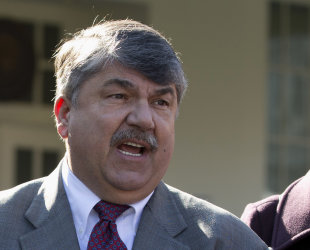

 The everyday ? filled with its supposedly inconsequential interactions and circumstances ? is actually quite consequential when it comes to romantic relationships.
  Margarita Tartakovsky, M.S. is an Associate Editor at Psych Central and blogs regularly about eating and self-image issues on her own blog, Weightless.


![[ Back to EurekAlert! ]](http://www.eurekalert.org/images/back2e.gif) Public release date: 28-Jan-2013
Public release date: 28-Jan-2013 Share ]